
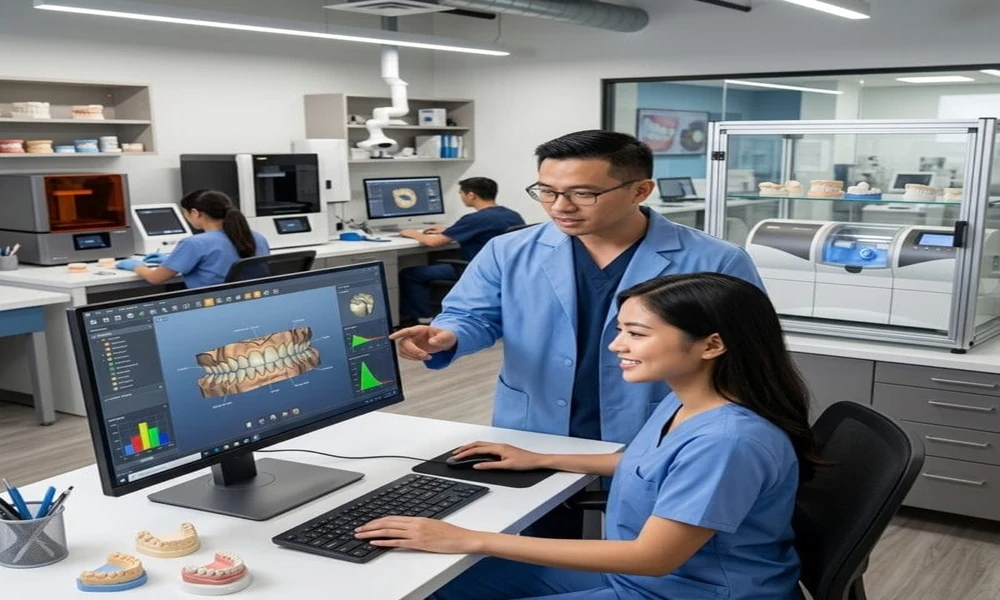

Not long ago, sending a case to a dental lab meant boxing up impressions, arranging a courier, and waiting days before any work could begin. Today, many cases begin with a file upload and are in a designer’s hands within minutes.
Cloud-based platforms are behind this shift. Instead of emailing large scan files or passing them between programs, a clinic can upload a case to a secure portal, add written notes or photos, and track its progress from submission to delivery. The design team sees everything in one place, including the prescription, the scan, and any special instructions.
For dentists, the biggest benefit is clarity. A shared case record means fewer misunderstandings about shade, material, or margin placement. If the designer has a question, it can be asked and answered inside the same case rather than through a long chain of phone calls and emails.
Scale matters too. A well-organized dental cad hub can route cases to specialists in different areas, such as crowns, implants, or dentures, and keep a clear history of every revision that was made. That makes it easier for busy practices to keep quality consistent as their case volume grows.
Security is a fair question here, and one worth asking about. Patient scans are sensitive health data, so reputable providers use encrypted transfers, controlled access, and clear data-handling policies.
For patients, these platforms are invisible, but their effects are not. Faster handoffs, clearer communication, and fewer delays between scan and delivery all trace back to how smoothly the digital pipeline works behind the scenes.
How Cloud Platforms Are Connecting Dentists With Design Teams
